

Skip to content

Calm at the end of the month

CashComfort takes the money stress out of the end of the month, so you know everything gets paid without working it out or checking again every time.

Nothing piled together, no sums to do, nothing to remember, and no doubt about whether everything gets paid.

€89, once. No subscription, no app.

One account for everything is one big pile

Your salary comes in. The rent goes out. Groceries, insurance, a restaurant, a tax bill, a new coat. All mixed together, in one pile.

Your banking app says €2,000. Lovely. But next week another €900 of rent leaves, and somewhere a tax bill of €1,200 is waiting. The balance is correct. It just does not answer the question you actually have.

How much of this money is really free?

Can I still afford this?
Is there enough left for the rent?
When does the electricity go out?
Have I paid that insurance yet?
Where did my money go this month?

It is rarely one problem

Four shortages run into each other. Only one of them is about having too little money.

Money

You come up short at the end of the month. One awkward invoice and the whole month is upside down.

Knowledge

You may well earn enough, but you do not know what your life actually costs per month. Nobody explained that at school.

the system does this

Time

You do not have a money problem. You simply have better things to do than check amounts and invoices every week.

the system does this

Action

You know exactly what needs to happen. And still that invoice sits there, and your good intention lasts about three weeks.

the system does this

The last three are about remembering, calculating and checking. Exactly the work a system can take off your hands.

A month with CashComfort

Four accounts at one bank

Each account has one job. Scroll on and watch your money move through the month without you having to do anything.

A woman calmly picking out a pair of shoes in a shop
Buying shoes without wondering whether the rent still fits

The same month twice

The same salary, the same bills, the same €1,200 tax bill landing on the 24th. Once with everything on one account, once with four.

With four accountsWith one account

No more money came in and no less went out. The only difference is that the amount for the tax bill had been set aside for twelve months.

And if that bill turns out to be €1,250 this year instead of €1,200, you do not have a €1,250 problem. You have a €50 difference.

The four account system

Spreading your money across four accounts. With four accounts each one has a single job. That makes it much quicker to see what is going on. Four accounts, four times clearer.

Income

Everything you earn arrives here

Salary, child benefit, maintenance, a benefit payment or anything you earn on the side. It does not matter whether it all arrives on the same day, or whether you have one income or five. Everything gathers here first.

A savings account, so without a bank card, works best. The money should arrive here, not leave on its own.

Income

Not even during the sales?

Income: No, hands off.

Not even for a weekend away?

Income: No, not for that either.
Monthly bills

The safety net

Rent or mortgage, gas, electricity and water, internet and phone, insurance, subscriptions. They leave by direct debit or standing order.

By putting just enough money here, the things that matter stay paid. €900 of rent? Paid. €150 of electricity? Paid.

Monthly bills

Not even to top something up?

Monthly bills: No, hands off.

Not even for a single day?

Monthly bills: No, not for that either.

Yearly bills

The pot for the big invoices

The tax bill, the car service, school costs, the sports club membership, presents. They do not come every month, but they are not a surprise either. So we turn them into a small monthly amount.

When such an invoice lands, you move the amount across to Day-to-day and pay it with a smile.

Yearly bills

Not even for that new phone?

Yearly bills: No, hands off.

Not even for a good offer?

Yearly bills: No, not for that either.

Day-to-day

The money you live on

Groceries, fuel, the hairdresser, restaurants, clothes, a pint. This is the only account with a bank card, and the only one you really want to keep an eye on.

The rent sits elsewhere. So does the tax bill. What you see here is what you have left.

Day-to-day

Can this account hit zero at the end of the month?

Day-to-day: With pleasure.

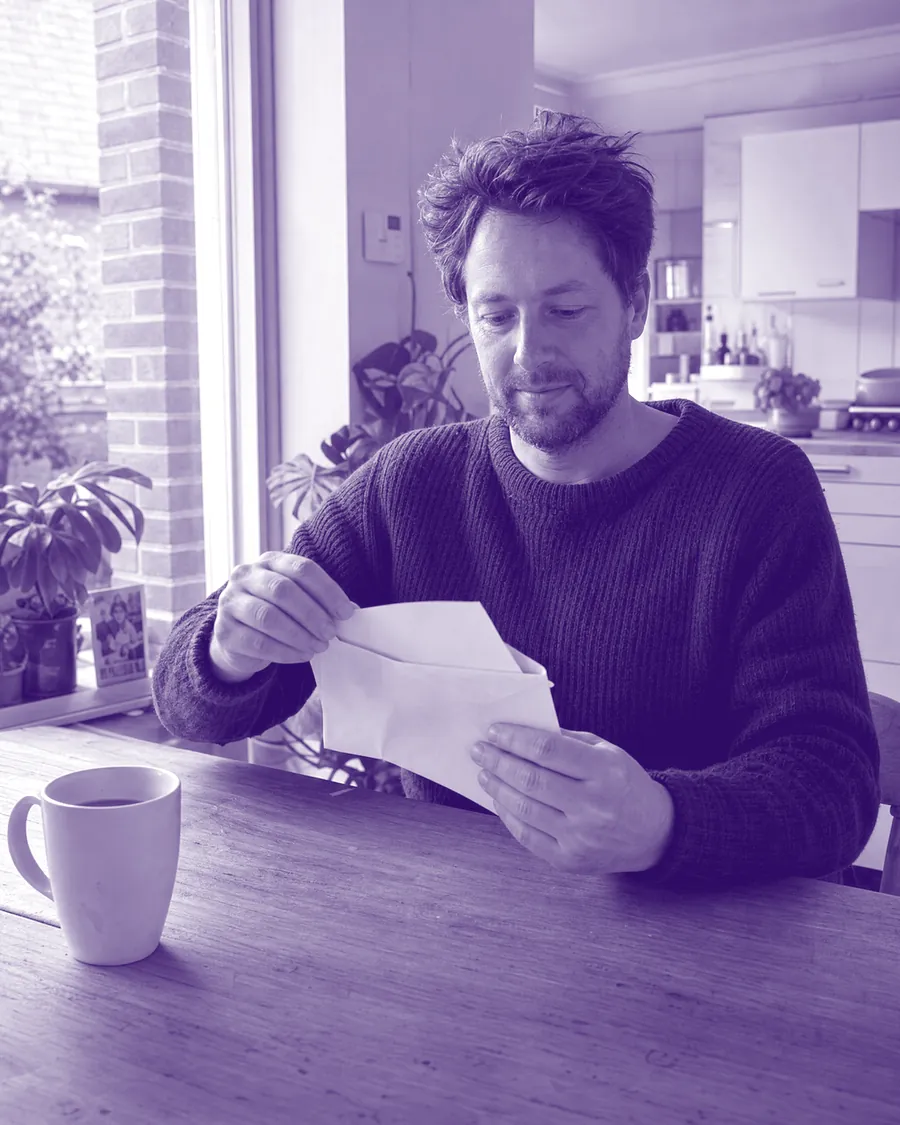
A man quietly opening a letter at the kitchen table
Opening a tax bill and thinking fine, the money is ready

Three ways a month can end

Three things can happen with Day-to-day, exactly as they did before CashComfort. The difference is that all three are fine now, because the rent sits elsewhere.

The money runs out early

Annoying, but it is all in one place. The rent is paid, so is the electricity, and the big invoices are ready. Take nothing from the other accounts, because that money already has an owner.

Something is left over

That is a gain you can see. Put it aside, move it to Yearly bills, or treat yourself. This money is not needed anywhere else.

You come out just right

The home is paid for, the fixed bills are paid, the big invoices are set aside and you have lived. A month does not have to do more than that.

Can that account hit zero at the end of the month? With pleasure.

What you really want is to get on with life

Nobody wants to be busy with money. You just want to be able to decide something without opening your banking app first.

CashComfort is not a coach and not a new hobby. It is a deeply boring, reliable system that you set up properly once and that does its work every month after that. No time, no discipline, no fuss.

What you see is what you have left

One account with a bank card, holding only the money you can live on this month. The rent sits elsewhere. So does the tax bill.

Work out your four amounts

You do not have to decipher your own bank statements, evening after evening. The Simulator does that, in half a minute.

Salary, child benefit, a benefit payment. All together, after tax.
Rent or mortgage, energy, internet, insurance, subscriptions.
Tax bill, car service, school, memberships, presents.
A couple laughing together on a sunny terrace on holiday
Going on holiday without suddenly realising you forgot a payment

You do not have to work any of it out

No spreadsheet, no lists, no evening with a calculator. We do not leave you to draw up your own plan, we walk you to it step by step.

Twelve months of statements0/12
  • Salary employer+ 4,310Income
  • Rent- 900Monthly
  • Supermarket- 150Daily
  • Energy supplier- 150Monthly
  • Reminder unpaid invoice- 15Extra costs
  • Child benefit+ 190Income
  • Petrol station- 80Daily
  • Internet and phone- 50Monthly
  • Car insurance- 480Yearly
  • Overdraft charge- 40Extra costs
  • Tax bill- 1,200Yearly
  • Sports club membership- 240Yearly

This payment of €480 appeared twice. Is this insurance or something else?

InsuranceSomething else

The Simulator reads your statements

You upload the statements of the past twelve months. The Simulator recognises your income, fixed costs, yearly invoices and day-to-day spending. When it is unsure, it asks.

Your accounts
  • Income€0
  • Monthly bills€0
  • Yearly bills€0
  • Day-to-daycard€0

You open four accounts at your own bank

A bit of work once, nothing dramatic. You give them their names straight away. Do check the bank charges: four accounts only make sense if your bank does not charge an absurd monthly fee for them.

Your checklist0/5
  • Rentdone
  • Electricitydone
  • Waterdone
  • Internetdone
  • Insurancedone

A checklist you tick off

Direct debits and standing orders move to Monthly bills, one supplier at a time. You get a printable checklist for that, with the name and the amount on each line, so you can see what is done and what is still to come. Incoming money does not move by itself: you give your employer and the authorities the number of Income yourself, and that is on the list too.

The first month
123456789101112131415161718192021222324252627282930
Old accountopen a while longer
Every payment is on the right account

The first month is a move

Do not close your old account on day one. Leave some margin until everything has moved. In a real move, not every plate is in the right cupboard after a minute either.

After two or three months you check whether the amounts are right and adjust them. After that you leave the system alone. Once a year is plenty for most households. Not every Sunday evening.

This system does not make money

A system cannot conjure away a structural shortfall. If €4,900 goes out every month and €4,500 comes in, there is a problem. CashComfort does make it visible, and that is far better than being surprised all over again every month.

If enough comes in, CashComfort mostly takes away the chaos. If too little comes in, you see much sooner where it goes wrong. Either way you gain something important: clarity.

And something else happens. Once you can see at a glance where you stand, being busy with your money suddenly becomes pleasant instead of tiresome. You start looking of your own accord, and whoever looks, adjusts. That subscription you never use, the insurance running twice, the energy contract from four years ago. We promise you no savings. We make sure you spot them yourself.

Coming in€4,500
Going out€4,900
A €400 shortfall, visible straight away

Pay once and never a subscription

You pay €89 once, VAT included. After that the system does its work every month, at your own bank.

  • The Simulator reads twelve months of statements and asks only what it is unsure about
  • Your four amounts, which you can still adjust yourself
  • The list of standing orders and direct debits that have to move
  • The checklist to keep track of what is done and what is still to come
  • You keep the bank of your choice
A father reading a book with his daughter, his phone face down on the table
No longer opening your banking app every week to check that it all adds up

What people ask

Do I have to change banks?

No. The four accounts sit at one bank, and that can simply be your own. Do watch the bank charges: four accounts only make sense if your bank does not charge an absurd monthly fee for them.

Do I need four bank cards?

No, one. Only Day-to-day has a bank card. For the other three, better not: the fewer temptations and mistakes, the better.

Can I keep using my credit card?

For your day-to-day spending, better not for now. With a credit card there is still €400 on your account while you have already spent €250 this month that only leaves next month. Then everything is back in one pile. Pay with the card of Day-to-day: what you see is what you have left. Once the system is running well, a credit card can have its place again.

Do I have to do something every month?

No. You adjust the amounts when your life changes: a new rent, a different energy cost, a child going into childcare, moving in together. And once a year you check them. Not every Sunday evening.

What if there is money left at the end of the month?

Well done. You can save it, send it to Yearly bills, use it for a goal or treat yourself.

And what if the money runs out early?

Annoying, but at least the problem sits in one clear place. The rent is still safe, so is the electricity, and the yearly invoices are covered. Do not simply take money from the other accounts, because that money already has an owner. The landlord, for instance.

Does CashComfort open the accounts for me?

No, you open them yourself at your bank. That is a bit of work once. The checklist tells you what to change where, one supplier at a time.

Will CashComfort make me richer?

No, and we do not promise that either. CashComfort is not about investing or getting rich. It makes sure the money side of your household simply adds up.

Through every month without thinking about it

You fill in your details, you connect twelve months of statements and the Simulator gets to work. After your payment you get the result, the full system and the checklist to start properly.

  1. You
  2. Your home
  3. Your bank
  4. Your statements
  5. The Simulator
  6. Payment
What are you setting this up for

Who you are

What does your household look like

This decides whether we set up one set of four accounts or two, and how we split the day-to-day amount.

Do you live alone or together
Children living at home
How does your income arrive

Which bank holds your money now

You stay with your own bank. We need the name to set the four accounts up there the right way.

Do you pay with a credit card
Do you already have a savings account without a bank card

How will you provide your statements

Twelve months gives the sharpest picture. Less is allowed, but then the estimate is rougher. If you have two accounts, select them both at once: what you transfer from one to the other then does not count twice.

The Simulator gets to work

Reading

  • It reads every line and sorts them into income, monthly costs, yearly costs and day-to-day living.
  • Whatever it is unsure about, it asks you.
  • After that your four amounts are set and you know what goes to which account every month.

Payment and delivery

  • You pay €89 including VAT, once. No subscription.
  • You get the Simulator, which reads twelve months of statements and only asks what it is unsure about.
  • Your four amounts, which you can still adjust yourself.
  • The list of standing orders and direct debits that have to move.
  • The checklist to keep track of what is done and what is left.
  • The two booklets with the full explanation, for home and for your business.

We use your details only to set CashComfort up. How we handle your details.

Your plan is ready

This is what you get.

Your plan stays in this browser, on your own device. Nothing is kept on our side.

Start for €89Work it out